RannaGhor

I am a bengali who has discovered the joy of food 3000 miles way from homeland. RannaGhor(means kitchen in bangla) is an attempt to share my kitchen experiments with like minded people out there. I love cooking ...it is my way to destress or to simply satisfy my taste buds. I am one of those who live to eat.
Showing posts with label Mains. Show all posts

Monday, 16 July 2012

Koraishutir Kochuri (Puris stuffed with peas)


Always a bride never the bridesmaid

Recently, I was watching the movie 27 dresses. I know it is an old movie. I am way behind on the hollywood and bollywood listings. The only time there is a massive update to the list is on my trips to india. In the age of 50inch tvs and multiplexes, majority of my movie watching experience is a 10inch screen in a pressurised cabin 30000 feet in air. I end up watching about 3 sometimes 4 time,technology and eyesight permitting. I decided make my veiwing experience better and enrolled in an online streaming website. Even with my faltering Virgin active (that was one failed branding exercise!!) braodband..the website worked! I had to watch some five hours worth of content to allow me a month’s free trial.So I diligently set about doing just that. Selected romance and more so chick flicks (did you know this is a bonafied category of its own) and set about watching one every day. What I came to realise was, I may have gained years, muffin waist and a few grey hairs, but I had certainly not lost the heart of a 16 year old. I can still get misty eyed at a common girl being courted by a prince, swoon over Mr Darcy and Mr Rochester and sigh over the ball gowns and dresses. The 27 dresses in the movie were hedious..a sort of allegory to the unplesant aspect of being
a bridesmaid one time too often. It must so tiresome. Times of India called Rahul Dravid ‘always a bridesmaid ..never the bride’. It was on some tour probably australian, where his test hundreds where trumphed by Sachin’s or ganguly’s. I am pitiful at cricket stats.
But I digress..i actually started with a digression (is there such a word??).
I was actually eating matar paneer while watching this, and I thought..have I ever eaten any item where matar (peas) was the bride not the bridesmaid. What I mean is where it is not aloo matar, matar paneer, methi matar malai...anything where the peas held their own and did not play second fiddle to the aloos, paneers and other veggies.
Try this for yourself. I could come up with two things only. Koraishutir kochuri and nimona. Nimona is a sort of curry made from fresh peas. I had a few times during my hostel days and I could not recall how it tasted. But koraishutir Kochuri...now there was something which got the tastebuds tingling. Koraishuti is essentially what bengalis call peas. Google failed me, when I tried to find out why such a big name for a small item?
Kochuri is any fluffed stuffed fried bread. So we are talking about a fulffed, stuffed fried bread filled with peas. Sounds like a rattle :-) ..yet is is awesum. One of the things you should have if you feel like indulging. On my bi-annual home visits during graduation this was an item which topped the to-eat list. Ma made it at least twice if not more. I loved it best with very (and I mean very) garlicky coriander chutney. Just coriander/garlic/ green chillies and lime juice with salt. Yummmm. It saved ma time to cook an accompanying veggie so I would get dollops of this chutney. The kochuris are not big ones. Broken in half they can consumed in two mouthfuls each. I would use it to enclose a big portion of Chatni and savour the taste. I am very good at chewing my morsels and I think I do it because of this fascination for food. I probably want to taste and savour the components before it goes down the pit of my stomach.

But those were the days when one did not think about the cosnequences of refined flour, deep frying or binge eating. I had not forgotten this kochuri and did try to make it on my own a couple of times. But the result was a FLAT bread with stuffing dislodged and leaking oil. I lost patience on my third attempt and ended up eating the stuffing as side dish and using the dough for making nimkis(which did not turn out well because of the wrong amount of moyan-crispiness)
So when ma was visting this time, I put this high on her to-cook list with an additional note that it should be cooked on a weekend to allow proper knowledge transfer.
She had a trick up her sleeve, the way that all mothers do. It was sprinkling of roasted and then grounded fennel,pepper and ajwain. It changed the equations of the taste from linear to quadratic.

 Another trick that I learnt was not to be greedy and stuff a lot of peas mixture, It has to be just the a  teaspoonful at a time. Also when rolling out the kochuri use a little bit of oil to avoid them sticking on the rolling pin.
All in all it turned out quiet a feast. With the pungency of garlic in the chutney vying for attention against the strong flavour of hing, it is a dance drama in every muthful.
One very good thing is that you can do the preparation on large scale and then store away the mixture and the dough in fridge. It can cherished over 2-3 days.
Here goes the recipe then.


Ingredients


For the Peas Mix
2 cups of peas (I blitz the frozen ones with some water in the microwave)
½ tsp asoeftida (hing)
3 green chillies
For Roasted powder
½ tsp cumin seeds
½ tsp fennel seeds (saunf)
½ tsp ajwain
2-3 pods of whole black pepper
salt to taste (for the filling)

For dough
3 cups of white flour (Maida)
3 tbsp of any oil
¼  tsp of salt

Oil for frying

Add the salt and oil to the flour and crunch it in hour hands to ensure the oil is spread throughout the flour. Add enough (a whole thesis can be written on the amount of water required for dough!!) luke warm water and make this into a dough. Cover with a damp cloth and let it rest while you get on with the preparation for the mix.

Add the defrosted peas with the green chillies into a food processor. If you do not have a food processor...you are joking right? Who does not have one in these days?..well I did not...till a year ago. The workaround is to crush the peas with something, a small bowl, the pestel mortar...although you will not get the smooth blend we are looking for. Whatever you use, do not add any water. The only water should come from the peas. Mix the peas with green chillies.
In a broad utensil add the oil and when it is warm add the asafoetida. Quickly spoon the mix into this. Now comes the patience part. You have to stir the mixture every now and then, depending on how good is the pan( which calims to be non-stick is). Slowly the moisture in the mix will vapourise and the mix will turn from a fresh green colour to a darker shade. On a medium flame it took me 15 minutes for this quantity of paste. If you are making more, then it would proportionally increase.
Once the mositure is all gone, you can add the salt and grounded powder (metioned in the ingredients- they should be lightly roasted and then ground to a fine powder.
If you need to adjust the hot quotient, add chilli powder at this stage.
Let the mixture cool.
Add enough oil in a deep frying vessel to at least cover one kochuri at a time. Let it heat up before you start rolling out the kochuris.
Divide the dough into calls the size of rasogulla, or lemons (the size we get in india). Slightly roll them out to flatten them and make into disks the size of 3cm dia. Spoon in little of the mixture, about ½  teaspoon into the middle and close the edges. Make sure nothing is coming out of the joint. Slightly massage it in your hands to spread the mix. Start rolling it out now, with a very light hand so the misture is not pushed out with vengence. Add a touch of oil if the dough starts sticking to the rolling pin. The 3cm dia should at least go upto 6cm. You know it is not rolled out properly if you can feel the dough thick at places.  And you know you should leave it alone, if you start seeing the greenish tinge appearing below the dough layer...because that means the mix might come out. The first one will never puff up. Call it what you will, but it is similar to my ‘Laws of Dosa’ (another day about this- but in nutshell the first dosa will always stick to the tava). But preserve and learn and you will be rewarded

Do not overcook it, take the kochuris out of the oil as soon as you see bubbles on the surface of the it.
Well that is all there is to it, as Forrest Gump said. Easy said than done!


Sunday, 24 June 2012

Duronto Ghugni (Fast Paced White Peas)


A long break from blogging. Not that anyone missed me, but the narcissict part of me did. Life changing events and adjustment to loss of loved ones takes some time getting used to. But time is a great healer..we just need to give it time. I hereby resolve in presence of my laptop, the telly and my phone (these being my connection to the real world) that I would post at least one recipe a month. I don’t commit a lot. I was always the one for setting a small target and overachieving J Never liked the concept of setting a stretch goal…what if I don’t make it.
Today is a good day to start as I have achieved one such goal. I completed 5 kms walk in the event called ‘ Race for Life’ organized by Cancer Research UK. It was a great event. In the restrained emotions of the british society it was nice to read lines like ‘I race for life of the Grandad I never met’, ‘I race for life of What Could have been’,  ‘_all those who are fighting’ and the one that encompassed the spirit of the day ‘ I race for life for A CURE’.


The success of the event was followed by a sumptuous pub lunch where we devoured no less than 10 different tapas items among four of us.
Back home, I did the mistake of measuring up myself on the scales…foolish foolish impulse…did I think 5kms of sedate walking would set off the patatas bravas and deep fried (chicken prawn, mushroom..almost anything).  I could not even think of a normal Sunday dinner. Strange how often I feel the urge NOT to cook compared to the urge of cooking. And still I am here writing a food blog. I must be nuts (there would be many who agree).

During the few days when I am the organized incarnation of myself I soak and freeze white/green peas, chole, rajma, moong dal etc. My disorganized self breathes a sigh of relief when I recall the frozen stash of goodies. Today in remembered the last two cups of white peas sitting in anticipation in their frozen state. I decided to cook ghugni. 


It is Bengali semi main course item, generally had either in the morning with porotha or more frequently in the evening  team with chop and misthi when people are visiting. For me anything that needs more than 15mins of pre/cook time , find a place for itself in main course. Ghugni is a light and quicker substitute for Chole. It forms a part of weekday quick cooking list. I loved the odd occasions when we were allowed to have the street food ghugni. Served in a dry leaf bowl it tasted wonderful. The chunks of coconut and slices of ginger were a perfect accompaniment to the mushy texture of the peas.  I am not sure if such things exists in anymore. Trips to Kolkata are now more hurried and harried. In a life of plenty time is the only scare commodity.
My ghugni cannot do justice to those memories. It would probably take me 10 mins to just get all the ingredients together. But it does gets to my dinner table in 20mins, which a winner on a sunday evening.

Ingredients

350-400gms white peas soaked overnight and drained
½ onion slicked fine
1 tomato cubed
½ inch ginger grated or paste
2 bay leaves
2 green cardamon
1inch cinnamon stick
2 cloves
2 tbsp cumin powder
2 tbsp coriander powder
1tbsp bhaja masala (use garam masala if you do not have the bengali secret)
4 tbsp oil
2 tbsp tamrina or tamrind pulp (optional)
Roasted cumin powder for garnish (optional)

Combine the bayleaves, cardamon , cloves and cinnamon with peas and water and pressure cook it. If you are using frozen peas like me, allow an extra whistle, else two should get it to a cooked state.
While that’s happening, heat the oil in a wok/pan. Add the grated ginger to that. 10secs for it to sizzle before you add the onions. Lightly sauté the onions, enough to get the raw taste out. You need not cook them to brownish state. Add the tomatoes and the cumin and coriander powder to it. Again the intent is to cook the raw taste out of the powders. You do not need to mash the tomatoes, let them loose their shape in the course of stirring and cooking. It takes generally 5-6 mins for this quantity
Once the peas are boiled, add it to the mixture in the wok and let it simmer.  At this point, season with salt and the bhaja/garam masala. I cover it and let it cook for 15mins. I sometimes add tamarina sauce or tamarind pulp to add the sour tinge to it. A slice of lemon work as well.
Garnish with chopped onions and fresh coriander.
In case you are wondering about the accompanying porotha as AS was, sorry that’s not happening. i am going to eat only ghughni, if you fancy something more you are welcome to the bread or the tortillas.
A day well spent…and ended

Friday, 11 November 2011

Golden Memories with Resthouser Daal

For everything that we eat in our lifetime, I feel our mind associates one particular taste experience to each one. So while I have had kakori kebab many times I remember the taste of the one in Saheb Sind Sultan in Hyderabad. Among other things phuchka from basu da, egg roll from civic centre in Bhilai, fish fry at my cousin’s wedding. Just the thought of these can help me come out of my mundane existence of cold sandwiches.

Toor or arhar daal is not a favourite lentil variety for Bengalis. In my home it was only cooked when we had non-bengalis over for dinner. In keeping with my antipathy to home food, I did n0t like regular mushurir dal. Toor dal was passable, its infrequent appearance making it tolerable. The first time I remember relishing and actually eating a whole katori (bowl) of it was in a resthouse...hence the name resthouser dal (which 6-7 year old can remember toor or arhar, moong or masur?). We were stuck in panchmari (a small hill station in Madhya Pradesh) forest guesthouse for a couple of days because of unprecedented rains which made the roads non passable. In borrowed sweaters and dog eared playing cards these couple of days of idleness were good for the adults. Maybe. I however, remember being very frustrated, being the only child in the whole group and nowhere or nobody to play. In those bleak days, the vibrant yellow dal was a saviour. I am sure my mom thought I was turning a new leaf. But alas my preference was just like monsoon. It ended with the season.

The warm dal was served with a squeeze of lemon and a helping of freshly melted ghee. And I loved it. The khansama was duly rewarded for extra 2 days effort. When we went back on papa’s next tour I did not like the dal. Maybe the cook left or maybe I needed monsoon and power cut to feel simple magic. Over years the only places which come close to the taste were resthouses. I think it is to do with the scarcity of ingredients deep in the forest combined with the smoke from wood burning chulhas to lend the wonderful taste.

Unfortunately there is no recipe I could search for something as specific as this. Finally I have worked out a combination that satiates my taste buds. It passed the ‘u like it but what abt others’ test when my friend asked me to cook it. This has now become a standard fixture in my ‘cook three things in 45 mins’ menu. AS pretends he likes it as well, though I think he would kill (hopefully someone else) for gujrati dal on couple of evenings. That one, I have discovered is an antithesis of this, as far as ingredients go. My MIL cooked it for us a couple of times. While I gladly gulped down bowlfull of it never felt the urge to make it yet. I might one day, when I tire of rest house concoctions........


Ingredients

Toor dal (non oily) – 1 ½ cup

Water – 4cups

Coriander leaves- 2 tbsp

Cumin seeds – 1 tsp

3 green chillies

3 cloves of garlic (4-5 if small cloves)

½ tsp turmeric

Ghee -3 tbsp

In a pressure cooker take the toor daal, salt and water and soak for 30mins. I generally do not have the time to soak..so I just put it all in the pressure cooker and hope that I don’t have anything more to do..which is generally not true. Another bane of my kitchen existence is the spilling over of the daal. Everytime!!if I figure out a way of having perfectly cooked daal and not have a spilled drop on the base of the gas...I will share it. For now 3 burst of whistles at high flames does the work for me. I don’t let off the steam immediately, but let it prolong the cooking.

After everything else on the menu on cooked, it is time to put the ‘phoron’. Phoron is basically ‘tadka’ or ‘tempering’...but it is also used as a figure of speech if someone wants keep popping into a conversation with their comments, unasked for. Culprits can equally be children or adults. On my last Indian vacation, I acquired a useful item. A tadka spoon. It is a blessing. I do not need to wash a whole kadhai for the tadka.

So in goes the ghee to warm up. Once slightly warm jeera and turmeric is added. The garlic cloves I crush with the pestel and add to this. When I get a fragrance of the garlic, I put in the coriander leaves. Be careful because it sputters, but what a way to end its life. Pour this into the daal and stir in. If the daal has gone cold by now then you can always warm it up.

And that is it really.

P.S. I never managed to take good pictures of this daal. It is so routine thing at home that we forget and just gobble it down. This time however I thought enough is enough. I did not wait to bring out the big guns camera. Just clicked a couple shots on my phone..hence the additional decoration.

Sunday, 10 April 2011

ITS ALL IN THE NAME (Kumro Chechki)


I received an email from a friend about the deadly combination of Bengalis and nicknames. It goes something like this

Some of the bengali names given to the boys when they are born are Chhoton, Bulbul, Khoka, Laltu, Gogol, Babu, Buro, Tutu, Bubu, Ghoton, Bhutan, Chhotka, Shanto, Bubai, Tubul . . . et al. Here is an attempt to alert people to a great injustice that is being perpetrated upon the sons of Bengal.


So you thought they were wimpy to begin with. Far from it!!! Their current state is a result of years of conditioning by the oppressors, namely, the women. By using panoply of psychological weapons, they have reduced these fine men to what you mostly see today. Let us focus on the first weapon in their hands - the nickname.


When a son is born into a Bengali household, he is gifted with a resonant, sonorous name. Bengali names are wonderful things. They convey majesty and power. A man with a name like Shushmito, Shamrat, Samudro, Rudro, Prokash, Indrojeet,Shurojit, Proshenjit, Bishshodip, etcetera, is a man who will walk with his head held high, knowing that the world expects great deeds from him, which was why they bestowed the title that is his name upon him. But it simply will not do for these men to get ahead of themselves. Their swelling confidence needs to be shattered. How can one go about it? This task is left to the mothers of these lads and is accomplished by the simple act of referring to the boy, not by his rather-great-sounding real name, but by a nickname which even Shakti Kapoor would feel ashamed to answer to.


There are five rules for creating nicknames, which need to be followed. They are:

1. Nicknames must have no connection to the real name. Orunabho cannot be called Orun. No, for that would be logical, and such things are anathema in the world of women. Instead he shall be called BHOMBOL. If possible, the nickname and real name must have no letters in common, but an ancient alphabet proves to be the constraining factor there.

2. Nicknames must be humiliating to the power infinity. If you are a tall strapping boy, with a flair for soccer, an easy charm and an endearing personality, then you shall be nicknamed - Khoka. And everytime, you have set your sights on a girl, and are on the verge of having the aforementioned lass eat out of your hand - your mother will arrive and pronounce loudly - "Khokon, cholo". The ensuing sea of giggles will drown out whatever confidence you had earned from that last winning free-kick.

3. A nickname must refer in some way to a suitably embarrassing incident in your childhood that you would give your arm and leg to forget. If it took you a little too long to shed your baby fat, then years of gymming will not rid you of the nomenclature Motka. If your face turned crimson when you cried as a toddler, you will be called Laltu. When you turn 40, your friends' children will call you Laltu Uncle. Even age will not earn you the right to be taken seriously thereafter.

4. Different members of the family will make up different nicknames each more embarrassing than the preceding one. If one member of the family calls you Piklu, then another will call you Pocha, and another will call you Ghoton. The humiliation multiplies.

5. You will always be introduced by your nickname until people forget you had a real name. Ranajoy might have taken on a gang of armed men single-handedly, but Tatai really didn't have a chance. After a point, Tatai will completely take over the beaten body of Ranajoy, weighed down by the pressure of a thousand taunts.


This strategy is surprisingly effective. Ask yourself - would you take Professor Boltu seriously? Or put much weight by the opinion of Dr Bubai? Or march into battle under the command of General Topa? The power of the nickname has scarred the psyche of Bengali men everywhere. It follows them like a monkey on their backs. That too, a monkey that was imposed on them by their own mothers, aunts and grandmothers


P.s. This was a fwd email and I do not know who can claim the rights as the author.

I could not agree with it more. I do differ in saying that I quite like it. I have a 22 character bhalo naam(good name) which is what gets put on passport and official documents and professional like. Then the retinue of nicknames starts and goes on. My mamar badi (mother’s side of the family) specializes in inventing weird nicknames. A beautiful mashi (aunt) is called jonglee (juglee), another one boka(dumb) which she certainly is not. I can at least trace the roots of Lokai, my nick name from that house to a distortion of word Lokkhi (godess laxmi). Namesake, Jhumpa Lahiri’s book barely scratches the surface of a life led with so many identities. It is a wonder all Bengali kids do no grow up with Multiple personality disorders. It is however the prefect way to quell dissatisfaction among the immediate family...whose suggestion you did not consider important enough to tag to your child. All mashi, pishi, dadu, didun get a chance to stake claim to have given a name. Who cares for the child anyways? In fact I did not even realize anything was wrong with all this, till AS mentioned he has just one nickname. AS did not take kindly to this type of malarkey. He was not even familiar with the word daak naam. He felt the full force of it with my cousins. Kid of four pishis and a mama and kaku adds up to a quiet a lot of cousins. Add to that the fact that each one can stake claim to at least 3 daak naam. In the first few hours all was good. AS was introduced to everyone by their bhalo naam. Things started to muddying up for him when bhojo was called and indrajeet answered. Or gutu tried the do the work which was assigned to gola and babun. I am quite tempted to create a family tree to put him out of misery at family gatherings. If it is any consolation the weird name calling doesn’t stop at innocent kids. When you listen to Bengali food names like chenchra, chechki,dalna, kalia, ghonto, jhol, jhal, bhate crop up with regularity. Rather than being straight-laced into specific ingredients these are basically templates which can be extended. Something similar to best practices templates I keep hearing about in every other meeting at work! When I cooked kumro chechki this weekend, I realized it was a good recipe on cry out hearts out about all the names we have been called till date. I remember kumro checkhi as a breakfast item accompanied with porotha or ruti. I hated it. Well that was then. We all learn worth of various things as we go through life. Mine would be to appreciate the distinct aroma and taste of bangali food. It is a simple enough thing to make and can easily be fitted on for a weekday dinner or a weekend brunch.


Kumro chechki

Ingredients

500 gms - Yellow pumpkin

2tbsp – kalonji(onion seeds)

2-3 Green cillies

Coriander (for garnish)

Oil

Salt

Yes that is it..to believe it ..cook it Cut the pumpkin into thick matchstick shapes. The best and easiest way to do that is to have ½ inch (don’t get your ruler out!!) thick slices. Pile all the slices together and then cut then lengthwise.

Add 3 tbsp of oil in a wok. I had tried with mustard oil, that gave a pungent smell, so this time I tried with vegetable oil. Add the kalonji seeds when the oil warms up. Let them sputter along with a couple of sliced chillies to lend a bit of heat. Add the pumpkin pieces. Lightly mix the oil into the pieces. Cover and cook. Try to contain your enthusiasm when you are turning the pumpkin over. It will cook quickly enough. In the meanwhile we want it to keep its shape and not turn into a mash. It took me 15-20 mins at medium flame to get the whole lot cooked. Sprinkle salt. My granny used to say everything needs its opposite to enhance the taste. I use this advice with caution. Bengalis as mistakenly known for having a sweet tooth and there is a misplaced belief that all courses should follow suit. A pinch of sugar (mind you a pinch) to round it off then. The coriander is my addition to the dish. You can skip it altogether. This goes best with porotha as already mentioned. But you can go for rice, daal or roti.

Sunday, 27 June 2010

Non Pestering Pesto

Someone said, “When things mean a great deal to you, exciting anticipation just isn’t safe”. I have had multiple doses of this anticipation in the past couple of months and am now mentally exhausted. I have made so many lists and crossed them out so many times that now when things seem to be falling into place, I just do not have the energy to be jubilant. We had planned for my parents and parents-in-law to visit UK. It was envisaged as a wonderful get together. A summit in the line of the G-8 or G-20s!!. The preparations were on similar scale. Countless conference calls, strategy discussions and research went into it. We pored over various visa forms and worked at deciphering what an innocent question like ‘who would pay for your food and accommodation’ in visa form might imply. I day dreamed about all the days out, restaurant visits and shopping trips. After the initial impediments of documents, visas and tickets everything was set. Then things started changing. Programs and schedules changed with the speed of light. Everyday there was breaking news similar to the umpteen news channels on air. I felt like a yo-yo..this anticipation was not safe at all for my mental sanity. In this state I managed to achieve what I have tried a lot of times earlier and failed. I managed to ‘let go’. I actually asked God to decide what was best and not give him a multiple choice option. And believe it or not, it worked. Things fell into place in their own time. He does know best. It is beautifully illustrated by a story from the book Vedanta Philosophy by A Parathasarthy.
Once upon a time two friends while walking came across seeds of a fruit. Each took a few and planted it at home. One of them, prayed to God for rain. Colossus clouds benevolently spilled over the land. He then prayed for sunshine. The sun shone in all its brilliance. A few months later, his tree looked limp and only had few fruits. He went to visit his friend to find out how his tree was. He was astonished to find it laden with fruits swaying in the breeze. Curiously he asked, “What did you ask God for, that you tree has borne such good fruits”. His friend replied, “Nothing, I just prayed, do what is best for this tree. After all God created the seed, he should know what is best for it”. This is such a simple yet important thing to realize.

It is not an easy thing to practice. Especially when from childhood itself, we are shoved in front of various God and Goddesses and prompted to ASK, please let me clear this exam, please let me come 1st in class, please let me get good placement, please give me a good husband. While it is important to assimilate the lesson of managing your expectation, it is equally important to work towards a goal.
Like all such things, religious teachings can be misunderstood. There is no scarcity of people who are so lazy, they would rather blame everything on fate than put in an honest effort first.

Here again I remember my thammi (Paternal grandma). I would ask her to request God to grant me good marks in exams. She would say, “Yes, I can pray for that, but then you have study every evening in my room. Only when I see how you study would I forward your request to God”. So I would gather my books every evening in the preparation leave and sit on her bed and study. I however could not resist a few sly glances at the small pedestal in the room for all residing deities to check if it was making any difference to them.

Anyways, things are better now and I am looking forward to welcoming my parents tomorrow. With so many things to do at the last moment I went for the quick fix today. Pesto pasta. Both AS and me we love pesto sauce. It is unlike anything we have ever had. So fresh and tingly, yet so few ingredients. I will admit I make pesto sauce at home very rarely. There are so many varieties available in stores. You could pick every day for a month and not tire of them. The type of pasta is also based of our taste rather than prescribed for pesto. We generally like the linguine. Mostly we have garlic bread with pasta, but today I added some roasted vegetables to this.

1 packet readymade pasta (either linguine or fusilie)
7-8 tbsp of pesto sauce
Olive oil to drizzle
Garlic (2 cloves)
Peppercorn (7-8)

Vegetables for roasting
Baby carrots (5-6)
Baby corn (3-4)
Tomatoes (small 2, sliced in half)
Onions (2 sliced in half)
Peppercorn (10-12)
Olive oil for drizzling

Boil about 6 cups of water. Put the pasta in the boiling water for 6-8 mins. Meanwhile take the readymade pasta sauce in a mortal and pester and add the garlic and peppercorn. Grind it. You can totally give this step a skip if you are happy with the taste of your pesto sauce.
Pour the boiled pasta in a colander and drizzle a few drops of olive oil and mix well. This will keep the pasta from sticking to one another. Now serve the pasta in a bowl and add the pesto sauce. This should be done when the pasta is hot. Because the idea is that the cheese in the pesto sauce melts with the heat of the pasta.

If you have time stem the vegetables. Else you can directly spread them out on a baking tray drizzle some olive oil, sprinkle a bit of salt and peppercorn and bake it for about 15 mins. I have a gas oven and I put it on gas mark 5. After 15 mins turn the sides and bake another 10.
Serve on top of the pasta. And that is it!!

Wednesday, 2 June 2010

Bash Baganer Ranna

In Matrix we are told the world we live in is not real. Well that was not such news to me. Don’t we all spend a good part of our childhood in the world of make believe? Whether a child is a boy or a girl, they are either soldiers or princess respectively.
In absence of video games or Barbie dolls and cartoon network, Pogo and Nickleodeon and sometimes playmates, I improvised. I favoured myself in the role playing more than any conventional games. I have been a strict teacher writing long questions for tests on the back of doors with chalk and beating the life out of the pillows at times. I have been a farmer planting seeds left over from my breakfast and expecting it to sprout into a glorious apple, lychee or Jamun tree the next month (it was realistic according to me). I have also tried my hand at being a bank clerk. Old passbooks (they are an extinct entity now) and counterfoil of used up chequebooks along with a red, a green and a blue pen formed the essentials of my desk. Add to it some discarded files and I became a knowledgeable number crunching clerk!!To be a street vendor selling pakodas...I used a tasla for the frying pan, an old badminton racket as the ladle, stones as my pakoras, clay to make aloo tikkis. The most innovative (if I may say so) was when I dressed myself as meerabai. It may be because the only saree my mom could spare at that time was dirty orange- close to saffron, the colour of hindu sanyasis and worldly renunciations (probably that is why she didn’t wear it) and I had to memorize some couplets written by Meerabai for school work anyways. So I spent a quite a few hours in a supposed trance, trying to chant back the memorized poems with the end of the saree demurely draped over my head. I would have scored well in my Hindi oral exams that term for sure. I didn’t realize how wonderful the words were, and how troubled her life would have been in renouncing the human marriage bond and claiming a celestial union. All this involved some level of imagination and high degree of conversation which was supplied by me for all the possible characters involved. In my defence against the obvious allegation of ‘this was too much’ all I can say is I did not have a sibling till I was in grade II and that I did have fun!!

I was mostly a harmless kid tucked away in some corner without making my mother’s or grandma’s life any harder. It was my Mom who got me small sarees from Calcutta (I had 2 cotton ones in wonderful colours..though I had a taste for the silks and the chiffons which continue to this day) to play around in when I started demanding more variety in my wardrobe. My granny suggested and organized a cooking picnic more than once for me and my friends. Some of my friends (the precious ones) were invited in the morning and a part of the open courtyard was covered with a bedsheet to create a small alcove for us to light a fire and cook. We were supervised, of course. Heavily. In fact it was just our believe that we cooked the food and not my mom or granny who kept dropping in at just the right time a spice was supposed to be added or the hot vessels needed any tending. The recipe did not vary. Kichuri (a mixture of rice, lentils and select vegetables cooked with barest of spices), tomato-r-chutney and a bhaja. Bhaja means fried in Bengali. Fried vegetables add an oomph to kichuri and make it the star of the show. Anything could be fried. I have heard that you should have five different ones. Big coin shaped potatos, diced okhras, round shaped aubergines, blossoming florets of cauliflower or long curled potol. There can be many more..but these are my favourites. We didn’t fry so many. We just fried one. My Granny gave it a name, bash baganer rannaghor. In her childhood in the village they were would spend an afternoon in the bash bagan (a bamboo thicket interspersed with other wild growths) cooking kichuri in earthen pots set over three big stones, a fire created with dry twigs and leaves coughing up some flames. She had a choda associated with it as well. A choda is a rhyming poem of about 4-6 lines generally sung to kids. I tried ‘googling’ it without any success. I guess it is lost with so many other things of her I would have liked to preserve.
To help you visualize, there is a scene from Satyajit Ray’s Apu’s triology Pather Pachali (song of the road), a recommended viewing even for non Bengalis. In the second or third minute there is a snippet of Durga (one of the protagonist) cooking a picnic with her mates.
http://www.youtube.com/watch?v=8F9wDupzeDc&feature=related
It does look very close to what picture I had in my mind.
To me my Grandma’s variation of cooking under the shadows of the bamboo with the birds chirping felt more adventurous than a corner of a courtyard and adults fussing about. It was difficult even for me to imagine bamboo clumps and conjure up the fragrances of that kichuri. But I have forever wanted to have another picnic of this style.

The recipe is to honour my grandma a wonderful lady who has vision and courage in measures beyond usual in her times. This simple recipe of kichuri tomato chutney and bhaja is me trying to keep the essence of the Bash Banager Rannaghor alive.


Kichuri Recipe

1 cup rice
1 cup moong daal (proportion of the rice and daal vary. but I have found that equal proportion makes for a good mixed effect ..for me..you could start with 1:2 and then work out which suits you best
1 carrot Diced lengthwise and then breadth wise...as batons
5-6 medium sized florets of cauliflower, I leave them big as I do not like them but A does and keeping them medium sized stops them from dissolving into the kichuri
½ cup peas
2 small-medium potato sliced in quarters ( i like them with skin on)

Spices
2-3 tej patta (bay leaves)
2-3 cloves
1 brown cardamom( badi elaichi)
2 green cardamom
1-2 ½ inch cinnamon sticks
A pinch of turmeric
Salt to taste

Optional
1 tsp Coriander powder
½ tsp jeera powder
1 tsp garam masala
A pinch of sugar

2 tbsp Ghee (I have managed to get the gawa ghee- ghee made from cow’s milk in London.Yes!! it adds the wonderful fragrance with nothing else can. But any other ghee or even oil would also do the work)

Heat 1 Tbsp of the oil/ghee in a pressure cooker. Add the spices to the ghee and fry lightly to release the their flavour into oil. Add the moong daal and fry lightly. When you start getting a slight fragrance from the daal its time to take it out and out aside in a bowl. A healthy alternative is heating the daal in a any other vessel without ghee. Make sure that the daal is not browned, it should turn just a shade or two darker than what it is initially. There is a wonderful variety of moong daal available in Calcutta, it is called shona moong. It looks like tiny gold seedlings. It melts much swiftly. I hoard it and only take it out when I want that special kichuri taste (which is almost always).

After taking the daal out, add the remaining tbsp of ghee.oil to the same pressure cooker. If you want to add the coriander, cumin power and the garam masala now is the good time. Then first add carrot batons. Saute for couple of minutes before you add the cauliflower florets. Another couple of minutes later add the potato and in the end the peas. You do not need to fry the peas for long. That is why we are adding it in the end. In the end add a bit of turmeric. Salt. Add the rice and mix well so that it gets coated with the colours and spices. Add the fried daal and water to this. I am not very good at understanding the water requirements in a pressure cooker. I generally make my rice in microwave, that way I have more control. Fortunately in kichuri a little extra waters would not do any harm. I generally add so much water that the water covers the vegetables etc and is about 2 cm above the rice line.
With about 4 whistles the aroma of kichuri starts filling the house and it is time to add the bhaja and stir the tomato chutney (recipes would be shared shortly).
If you feel the kichuri is runny, then let it simmer for a bit to reduce the water. Remember that kichuri does soak in some of the water if allowed to cool down. So if you are hoping to make it work for your lunch as well as dinner (which I invariably do) then keep it a bit runny than what you would have.
Ladle it into a plate and add any accompaniments that you want, bhaja, chutney, achar, papad.
I sometimes like mine with more spice. For that I add a twist I learned from a maharashtrian friend of mine. In about 2 tbsp of warm (not hot) vegetable oil (any oil other than mustard would do ), add a pinch of cumin seeds, finely chopped garlic (I add lotssss)and sliced green chillis. Just keep it on heat for 10 secs or so and then take off the gas. Add salt, red chilli powder and chopped coriander. Add this over the kichuri to get the added zing, not that it needs ones.
The bengali kichuri is different from that made in other parts mainly because it is richer in spices and heavier in content. It is something to have and then do nothing for rest of the day.
Happy eating!

Thursday, 18 March 2010

Should I Read Books

Should I be reading books? ..rarely does this thought come to me..Today I thought I may want to sit down and think about it.

Parents are generally worried about the extra-curricular activities of their child adversely affecting the academics. Mine worried about books overpowering books. For me, Nancy Drew came before Gulmohar English reader; Gone with the Wind challenged the basics of physics while Elizabeth Bennet and Fitzwilliam Darcy rivaled the bonding theories of Chemistry. History was understood with Freedom at Midnight and geography traversed with Jules Verne’s various adventures. The number of sleepless nights I have spent reading books legally beside a lamp and illegal under my blanket will far outstretch those spent on pretended studying. While the bulk of A Suitable Boy was unsuccessfully hidden between M.L.Khanna and ABC’s of Physics, the inevitable Mills&Boons were thin enough to be stowed away in notebooks and shared with classmates. I must thank J.K.Rowling for waiting till I was in engineering before she committed Harry Potter to print. Failing that I am not sure what vocation I might be pursuing now.

With a job came the liberty to buy books. Many afternoons were spent at the erstwhile second hand book market of Flora fountain in South Mumbai, gathering numerous treasures and layers of tan. The new life of was shared with the Agony and Ecstasy of Michelangelo’s creation long before I could admire the ceiling of Sistine Chapel with my own eyes. The days spent ‘on bench’ in an IT company were utilized wandering The Far Pavilions. Mumbai, my workplace became more than a city to me while reading Maximum City in the suburban train journeys. The city unfolded itself before me through the pages and enticed me to fall into an illicit affair with it.

Marriage was not untouched by books. Our relation was founded on an affinity for Satyajit Ray’s mysteries, nurtured on the opinions about the World Wars and blossomed with travel guides duly packed on vacations. Harry Potter and The Deadly Gallows almost cost me my marriage as it implored to be finished at one go, forsaking even my better half. Just a month back my teenage years were revived with the Twilight saga. I involuntarily kept smiling late into the night while sharing Bella and Edward’s challenges.

Changing times have changed my preferences of books. From exploring the secret passages with Enid Blyton to the tribulations of heart with Jane Austen to finally questioning the world through Non-fictions, reading may have come a full circle for me. To me books have been like a friend who when put on the shelf propelled my life even with its ‘back’ turned on me. But staring at each new foreword beckoning me to an imaginative world of letters versus the daily grind of living threatening me the question ‘Should I be Reading Books?’ becomes a redundant one.


Chicken Kebab
Ingredients
For Boiling
300 gms boneless chicken ( sliced into 2-3 inch slices)
2-3 cloves of garlic
½ inch ginger
3 big black cardamom
3-4 cloves
2-3 1 inch sticks of cinnamon
1-2 Bay leaves
1-2 leaves of javentri/mace
A few shavings of nutmeg

Green Chutney
2 cups coriander leaves
½ cup mint leaves
1-2 green chillis

Masala
2 medium sized onions sliced lengthwise
2tbsp - Garam Masala (any would do , but if you want a distinctive flavour you can dry grind the ingredients mentioned in the boiling part and use that)
½ cup chopped coriander
1 tbsp Amchur or Anardana powder
1 tsp red chilli powder
1 tbsp ground cumin powder
Salt to taste

Oil for frying

Bind all the item except the chicken given in the boiling section into a small piece of cloth. In a pressure cooked put this along with the chicken pieces and fill it with water.
Cook it for 2-3 whistles. I generally list the chicken rest in this mixture while i get all other items ready.

Grind the coriander, mint and chilli and keep aside.
In 2tbsp of oil fry the onions till they are dark pink in colour.


Take the chicken pieces out of the cooker and let then cool enough to allow you to add it to food processor. I know that actual chefs might balk at the thought of kebab out of boiled instead of minced meat. But this is the best way for me to make it at home. I do not much care for the kebabs available in UK. They are nowhere near to what I am used to. There are two kebab that I still dream about. One was Kakori Kebab I had in Sahib-Sind-Sultan in Hyderabad. It just melted in my mouth. Awesome. The second was a greenish type of kebab I had at Kareem’s in Bombay. Can’t remember its name. Anyways this will have to do for the time being :-).
Ok so process the chicken at very low speed in the food processor. If it becomes too flakes, add a little bit of stock (the boiled water we had left in the cooker) or the green chutney prepared earlier. It should be such after processing that it can bind together. I have seen my mom using channel daal (yellow split lentil) while boiling chicken to get this binding. Some also use cornflour. I have however not had any problem in getting the mixture to hold so I do not use any of this.
Now mix this processes chicken with all the items listed under masala and the fried onions. Adjust the salt. Make equal sized balls and then flatten them into tikkis .
Heat 2 tbsp of oil in a skillet/ tawa or frying pan. Add the flattened balls and cook them on medium heat for 5-7 minutes on each side.
If needed garnish with onion rings and chat masala.

Monday, 18 January 2010

Let it snow, Let it snow, Let it snow

Its snowing!!. Or has been since last few days.Everything has turned white. It never ceases to surprise me ...this sudden transformation from green to white. We had a hard frost as well. It adds the silvery touch to the trees which the snow somehow cannot. From the train on my way to work, the countryside is magical. It looks all out of the movie set of ‘Narnia’. There is no other way to describe this.

I lived 5 years of my life in Dehradun, under the shadow of Mussoorie without ever once witnessing snow. That only added to the wonder for it. I would have never predicted myself going about my regular activities with snow around. It was always something you had in hill stations..to be experienced on a holiday.

I could really appreciate a lot of the wonder of snow because I was able to stay at home and work. Thank god for software industry. You would assume that working from home for both of us would be a relaxing experience. Well...it wasn’t. In between conference calls, answering emails and working in the system..we ended up working in different rooms.
Of course we did not risk our bones to get much grocery and there came a time when we didn’t have enough left to cook.

It was the perfect time to cook Pav bhaji. Pav bhaji has become a dish coupled with fridge cleaning. It is also one good way of throwing a lot of vegetables together without causing disharmony. It saves me a lot of time as well, because it is not process intensive.


Ingredients
For the Masala
Onions – 2 large
Tomatoes – 2 large
Corainder – 1½ Cup
Ginger – 1 inch
Green chilli – 1-2 as per the fieriness you want
Lime – ½

Pav bhaji Masala (optional)- I skip this sometimes to get the medley of taste from the vegetables
Garam Masala – 3 Tbsp
Coriander Powder – 2 Tbsp
Cumin powder – 2 Tbsp
Oil
Salt

Vegetables (diced)
Potato – 2large
Carrots – 3- medium sized
Capsicum – 1 large
Beans – about 150 gms
Broccoli – 7-8 medium florets
Cauliflower – 7-8 medium florets
Peas- 1 cup

I sometimes throw in beetroot/ cabbage..basically anything other than slimy ones like aubergine.


Boil the vegetables either in a pressure cooker or in a stock pot. Drain them in a colander. Try to preferable time it such that you have then ready when you are adding the powder spices in the tomatoes and onions.
Heat the oil and add the finely chopped onions. When they become very soft add the tomatoes. A couple of minutes later add the ginger pieces. If you do not the taste of ginger then add them with onion so that they can be fried. When the tomatoes are mushed up add the powder spices and mix well. Add 1 cup of the chopped coriander to it as well. Let is cook till it starts oozing oil. Now add the boiled vegetables and mash them up whichever way is easier for you. I use a masher because i like to get the texture of the vegetables. You can use a hand mixer as well.

I have not included any details of the Pav because it is totally up to you what you want to eat the bhaji with.Rice. chappati bread or Pav.

Wednesday, 16 December 2009

Trainspotting

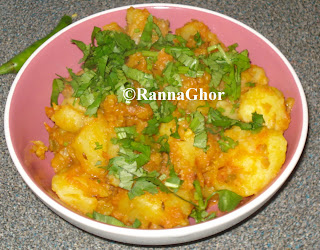
A(my better half ;-)) prefers home cooked food to anything else. I take is as a compliment to my skills, though I know that is taking it too far. It was one of those weekends when you plan to go out..but do not want a pizza bloating you up and spoiling the day. And so we thought we would have a brunch and then go out. I thought of making an Aloo tomato curry, but A(with his helping attitude) had already boiled the potatoes so I improvised and made this dry sabji. It is good for carrying over on journeys with methi thepla perhaps. I remember a version of this being a staple journey food.

In my childhood the annual holidays were spent in Calcutta, without fail and the journey used to take better part of 2 days. Of course in those days you really could not think of eating the railway food for fear of the after-effects. So apart from the mound of luggage needed for a month long stay , we would have an extra bag filled with eatables and specially prepared food which would not go bad in the scorching temp of 35°C. Oh and a big Milton water flask..:-) bisleri was way into future. I was always apprehensive and fearing the worst when my father disembarked to get that precious flask filled in. Even when I started travelling on my own I managed numerous journeys without getting down on the platform. Extreme I know!!
I will post these long staying recipes when I start trying them out. But for now here is the recipe for the quick and tasty aloo tamatar sabzi.


Ingredients
  • 4-5 medium sized potatoes
  • 3 tomatoes
  • ½ inch ginger
  • Jerre (Cumin seeds)-1tsp
  • Holdi(Turmeric powder)-1tsp
  • Lal Lonka gudo(red chilli powder) – 1 tsp
  • Salt
  • Oil.

    Boil the potatoes and peel them.Cut them lightly into ½ inch pieces.
    Blend the tomatoes with the ginger. You should not need any water during this , as tomato has a lot of water of its own.
    Heat oil in a vessel(ideally kadhai) if not a pan would do.
    Add cumin seeds. If lightly crushed would be good. Do not add powder.
    Add the tomato ginger paste and the green chilli sliced. Fry it for 5-6 mins on medium flame. Add turmeric powder and chilli powder. Fry for another couple of minutes.
    The test is to be sure the raw smell of the spices have gone...and the colour of the paste will intensify.
    Now add salt and add the potatoes to this.
    Mix well and cook by covering for 5 mins.
    Done!!Taste great with puris or luchi


Monday, 7 December 2009

Race with time...

Weekdays are days for fast foods...the total time interval between reaching home and going to sleep is a barely 3-3.5 hrs. We need to cook, eat, wash and catch on some news before within this limit. Anymore than 45 mins in the kitchen is a waste.

Over the last couple of years I have managed to find some shortcuts in the traditional recipes. Some learnt by mistakes...costing me double the time in kitchen , others..through more experienced cooks who generously share through their blogs.

This one recipe is something which I have found very handy at times when I have to entertain on a weekday. Its the traditional chole prepared with a difference. Whisk a quick raita and a mixed daal and it can pass for a good base of a weekday dinner. If you are preparing for yourself only, then you can skip the daal and raita. I always try to be availble for my guests instead of being in the kitchen. The aim is to be an effortless hostess... this preparation helps to a certain extent in that.

Chole the ragda style.

Ingredients (serves 4 people)
1. Chick peas - 250 gms
2. Onions - 1 large
3. Coriander/cilantro - 5 tsp chopped up
4. Mint leaves - 2 tsp chopped up
5. Green chilli - 2(according to taste)
6. Garam Masala - 2 tbsp
7. Cumin powder- 2 tbsp
8. Tamarind - approx 5-10gms ( not needed if you have any tamarind sauce, e.g. Tamarina by maggi)
9. Black Pepper - 1/2 tsp
10. salt- to taste

In the morning before you leave for work, soak the chick peas in water. Also if you do not have Maggi Tamarina Sauce then soak the tamarind separately in water as well. For 10 gms put int no more than 3 cups of water.

In the evening when you come back, first thing to do is put the chickpeas with water into a pressure cooker. if you want you can put in a slice of ginger and 2 cloves of garlic. Totally optional. After that sqeeze the tamarind to get most of the pulp and water. Just remove the residue and put the water on to a slow flame.

Now take some time and get fresh.

A good 15 mins later the chickpeas should have been done. Take out 1 cup out of it and keep separate. Add coriander and mint and green chillies to the cupful of the chickpeas and make a paste in your food processor.
Add some jiggery or sugar to the tamarind water meanwhile and stir it at regular intervals. When it thickens then mix some black salt(optional) and cumin powder to this.
Heat oil in a vessel.Add a pinch of cumin. And then the onion paste. Fry the paste till the raw smell of it disappears. Then add the chickpeas/coriander and mint paste prepared earlier. Keep stirring and frying this mixture. Add coriander powder and salt, keep frying. When the paste starts leaving oil through its sides, then add black pepper and then the remaining of boiled chickpeas. If you want you can make this a dry preparation or add the water you boiled the chickpeas in to make a sauce. Let it simmer for 10 mins on low flame.
After that add 3tbsp of the tamarind sauce you prepares or Maggi tamarina and garam masala and let it simmer till it reaches the consistency that you want.
Garnish with chopped coriander and tomato.


Sunday, 29 November 2009

Singing in the rain

Its a depressing Sunday evening and I have taken a step when i thought i would never do. BLOG.
I have tried to keep a diary at different points of life and struggled with it.And blogging had never felt like an option. Why on earth would I want complete strangers to read something I do not want to share with my better half also!!. But I have a mantra in life. To try things out at least once. So here I am.
I owe this space to my stomach:-). My passion for food was dormant for the initial 18 years of my life.A good decade later I cannot identify with the girl who did not like to eat.
Today I have spent the better part of morning in the kitchen while the wind and rain beat an accompanying tune on the kitchen window. Sunday evenings are depressing and the British weather doesn't do much to alleviate it. Apart from reading books which allows me to escape , the other thing I can do is cook. So sundays are generally heavy on the cooking side.
Today was the first weekend after a quick trip to India and nostalgia made me more intent on trying to cook something new.
so it was Mochar Ghonto/Laal Saag and bangali pulao.

We somehow managed to find Mocha in UK. This is the first time I have cooked it. The taste was well worth the effort, or may be its the effort that made it tastier :-). I do not think I can claim credit for either the recipe or the effort in getting the ingredients. The recipe is courtsey my mom who was too happy to know I was undertaking the task of making 'Mocha'. The credit for finding the ingredient itself is due to my husband, who has discovered a sudden love for bangali food and which is why I have called this blog 'Notun Bangali'.

Also this is my first blog so I do not want to overrun my welcome 'word-limit'. A quick set of directions are given below. I do to do better than this in future. But for now my stomach statisfied, deludes my mind away from nostalgia. It helps me to look out at the bleak scene out of my window and still hum 'singing in the rain'.

Mochar Ghonto
Ingredients
  1. Mocha- Bannana Blossoms (as shown in the photograph)- 1 medium sized
  2. Aalo (potato) - 2 medium sized, either boiled and diced in big chunks or just cut into small pieces
  3. Jerra (cumin seeds)- 2 tsp
  4. Aada (Ginger) - 1 inch
  5. Tej pata(Bay Leave)- 2
  6. Laal lonka gudo (Red Chilli Powder)-1/2tsp
  7. Holdi (turmeric)- 1/2 tsp
  8. Oil - approx 3 Tbsp
  9. Salt to taste
The largest portion of time is in preparing mocha, as other websites would also tell you. Well if you do not believe, you learn it the hard way. As I did.


Basically you need to peel of the layers and separate the florets.
As you go towards the centre, a dense part of the stem comes out. This can be eaten too, I am told. But as this was the first time I was cooking it , i did not take it.
Immerse the florets into warm waters with salt and turmeric.
Then pressure cook this again with salt.
The water that comes out is a pretty pink and enticing.
But throw it away :-) and press the mocha florets to get any remaining water out. Chop these up very finely.
Meanwhile prepare a paste of the cumin seeds and ginger.
The less water you use to make the paste the better.
In a vessel heat oil, add a few cumin seeds and the bay leaves.
Add the potatoes. (If boiled cook for 3-4 minutes on medium heat, if not boiled then fry till they start turning brown on edges).
Once potatoes are done add the ginger-cumin paste & turmeric and cook for another couple of minutes.
Now add the mocha and mix well.
let it cook for another good 5 mins. Sprinkle red chili powder and salt to taste.
You can also sprinkle a bit of lime juice.

Your labour of love is ready to be devoured.


Oh..forgot to mention, when you are preparing the mocha , you hands can get black due to the secretion. I had some advance warning and managed to limit the damage to just two fingernails. prevention is to keep your hands oiled and rub salt. Of course, you shouldn't cook mocha after you get a manicure :-)

P.S It would probably take another sunday evening to write about the recipe for laal saag and bangali pulao.